
Testing / Testing
Result :
test
Introduction
Purpose
Governance, risk, and compliance (GRC) is the coordinated way an organization directs decisions, manages uncertainty, follows obligations, operates controls, and retains evidence. SAP Access Control contributes to that model by governing who can access business systems, whether the access creates risk, how approvals and provisioning are controlled, how privileged access is monitored, and whether access should remain.
This revised chapter covers the complete conceptual foundation needed before licensing, installation, and configuration. Its structure, examples, tables, and diagrams are original; technical concepts are cross-checked against the uploaded reference chapter and current SAP sources.
Learning Objectives
Explain why GRC is required in complex and regulated organizations.
Position SAP Access Control within the broader SAP GRC portfolio.
Describe the product evolution and terminology used by projects.
Understand the layered architecture and recommended landscape separation.
Relate ARA, ARM, EAM, BRM, and reviews to a continuous control lifecycle.
Recognize supported-system categories and hybrid cloud integration considerations.
Scope and Verification Context
Product examples refer to SAP Access Control 12.0. Exact component levels, UI requirements, databases, plug-ins, supported targets, cloud services, features, maintenance status, and licensing can change. Validate design decisions through the current SAP Help Portal, Product Availability Matrix, Maintenance Planner, SAP Notes, security guides, and commercial agreement.
Why Organizations Need GRC
Business and Regulatory Drivers
Organizations must protect financial reporting, personal data, intellectual property, operational assets, and critical decisions while meeting laws, regulations, contracts, and internal policies. Requirements such as management accountability, independent oversight, control testing, evidence retention, and timely disclosure increase the need for repeatable governance. Frameworks and regulations differ, but access controls frequently support their objectives.
| Driver | Access-governance implication |
| Growth and acquisitions | More systems, roles, identities, and inconsistent local controls. |
| Remote and flexible work | More digital access paths and dependence on reliable identity data. |
| Cloud and hybrid landscapes | Access decisions span different authorization and integration models. |
| Audit and regulatory scrutiny | Approvals, risk decisions, monitoring, and removals require defensible evidence. |
| Automation and AI | Machine speed increases the impact of inaccurate data, rules, or ownership. |
| Cyber and insider risk | Critical access and privilege must be limited, monitored, and reviewed. |
Technology and Operating-Model Risks
One person can initiate, approve, and complete a sensitive process.
Employees retain access after moving jobs or leaving the organization.
Privileged access is permanent, shared, or insufficiently monitored.
Multiple systems create cross-system conflicts that local reviews cannot see.
Manual approvals lack consistent risk checks, evidence, and follow-up.
Cloud and third-party applications expand the access boundary.
How to Evaluate a GRC Solution
Can it support the actual SAP, cloud, and non-SAP landscape?
Can it analyze complete and cross-system access using validated rules?
Does it integrate with identity, HR, workflow, provisioning, and audit processes?
Can business owners understand and act on the results?
Are performance, availability, security, retention, and support suitable?
Does the operating model have people and processes to sustain the technology?
GRC Operating Model
Governance
Governance defines direction, accountability, oversight, decision rights, escalation, and acceptable behavior. For access governance, it answers who owns a role, who approves access, who can accept residual risk, who monitors emergency use, and who verifies removal. Technology should enforce these decisions without becoming their owner.
Risk Management
Risk management identifies events that could prevent objectives, evaluates likelihood and impact, selects a response, operates controls, and monitors residual risk. An access conflict is a risk indicator; the organization still decides whether to remove access, redesign duties, apply a time-bound mitigation, avoid the activity, or accept the residual risk within authority.
Compliance and Control Evidence
Compliance translates external and internal obligations into policies, controls, monitoring, issue management, and retained evidence. Evidence must show more than a recorded approval: it should demonstrate the data considered, the risk result, the accountable decision, the target-system outcome, and later review or removal where applicable.
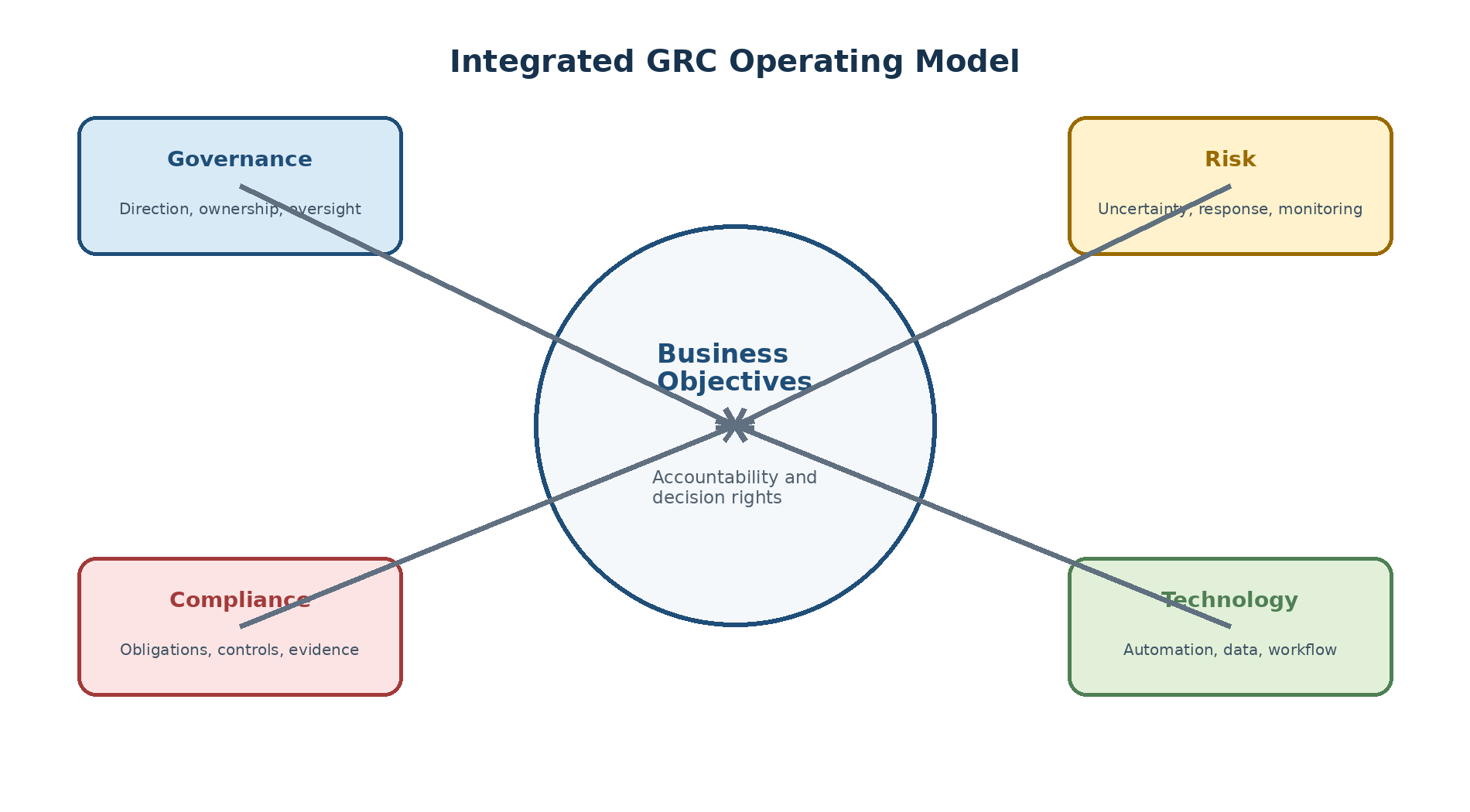
Figure 1. Original diagram: integrated GRC operating model.
SAP GRC Solution Portfolio
Major Solution Areas
| Solution area | Primary purpose |
| Identity and access governance | Govern access risk, requests, roles, privilege, and certification. |
| Enterprise risk and controls | Document risks and controls, assess effectiveness, monitor exceptions, and remediate issues. |
| Audit management | Plan, execute, document, and follow up audit work. |
| Business integrity and fraud monitoring | Detect suspicious activity and support investigation scenarios. |
| Cybersecurity and data protection | Protect business applications, sensitive data, and security operations. |
| Regulatory and trade management | Support applicable regulatory and international trade processes. |
Where SAP Access Control Fits
SAP Access Control is an application within the wider SAP GRC portfolio. Its focus is access governance: risk analysis, workflow-driven access requests, controlled emergency access, role governance, and periodic review. It complements SAP authorization administration and identity lifecycle processes; it does not replace them.
What Technology Cannot Replace
Accurate business-process ownership and role design.
Validated segregation-of-duties and critical-access rules.
Authoritative joiner, mover, leaver, and contractor data.
Management judgment for exceptions and residual-risk acceptance.
Secure systems, patching, monitoring, incident response, and change control.
Independent assurance that controls are designed and operating.
Evolution of SAP Access Governance
From Preventive Access Controls to Integrated Governance
Modern SAP Access Control evolved from earlier products focused on conflict analysis, compliant provisioning, firefighter access, and role management. Over time, the capabilities moved into an integrated ABAP-based governance platform with workflow, analytics, broader SAP S/4HANA and web scenarios, periodic reviews, and hybrid integration. Historical product names are useful for understanding older documents and project vocabulary, but current configuration must use release-specific documentation.
Terminology Across Generations
| Business capability | Common historical terminology | Current SAP Access Control terminology |
| Access-risk analysis | Compliance Risk Calibrator; Risk Analysis and Remediation | Access Risk Analysis (ARA) |
| Access provisioning | Access Enforcer; Compliant User Provisioning | Access Request Management (ARM) |
| Privileged access | Firefighter; Superuser Privilege Management | Emergency Access Management (EAM) |
| Role governance | Role Expert; Enterprise Role Management | Business Role Management (BRM) |
Why Historical Names Still Matter
Teams still use terms such as Firefighter, FFID, CUP, RAR, and role expert in conversations, custom objects, and legacy documents. Consultants should map the old term to the current capability before interpreting a requirement. A historical name must not be treated as proof that the current release behaves identically.
SAP Access Control Architecture
Experience Layer
Users may interact through SAP GUI, browser-based applications, SAP Business Client, workflow links, or SAP Fiori launchpad depending on the release and design. UI activation requires the correct services, roles, catalogs or launchpad content, routing, authentication, and supported browser. Exact UI components and support-package prerequisites require current verification.
Application and Platform Layers
The central application contains Access Control configuration, rules, workflows, owners, requests, reviews, reports, jobs, and audit histories. It runs on the supported ABAP platform and uses its security, workflow, transport, background-processing, logging, and database services. Database options and feature availability are release dependent and must be taken from the PAM.
Integration and Managed-System Layers
Connectors and plug-ins exchange users, roles, profiles, authorization values, organizational information, usage, privileged-session activity, requests, and provisioning results with managed systems. SAP ABAP targets commonly use RFC-based integration, while supported identity, database, cloud, portal, or non-SAP scenarios can use other interfaces or adapters.
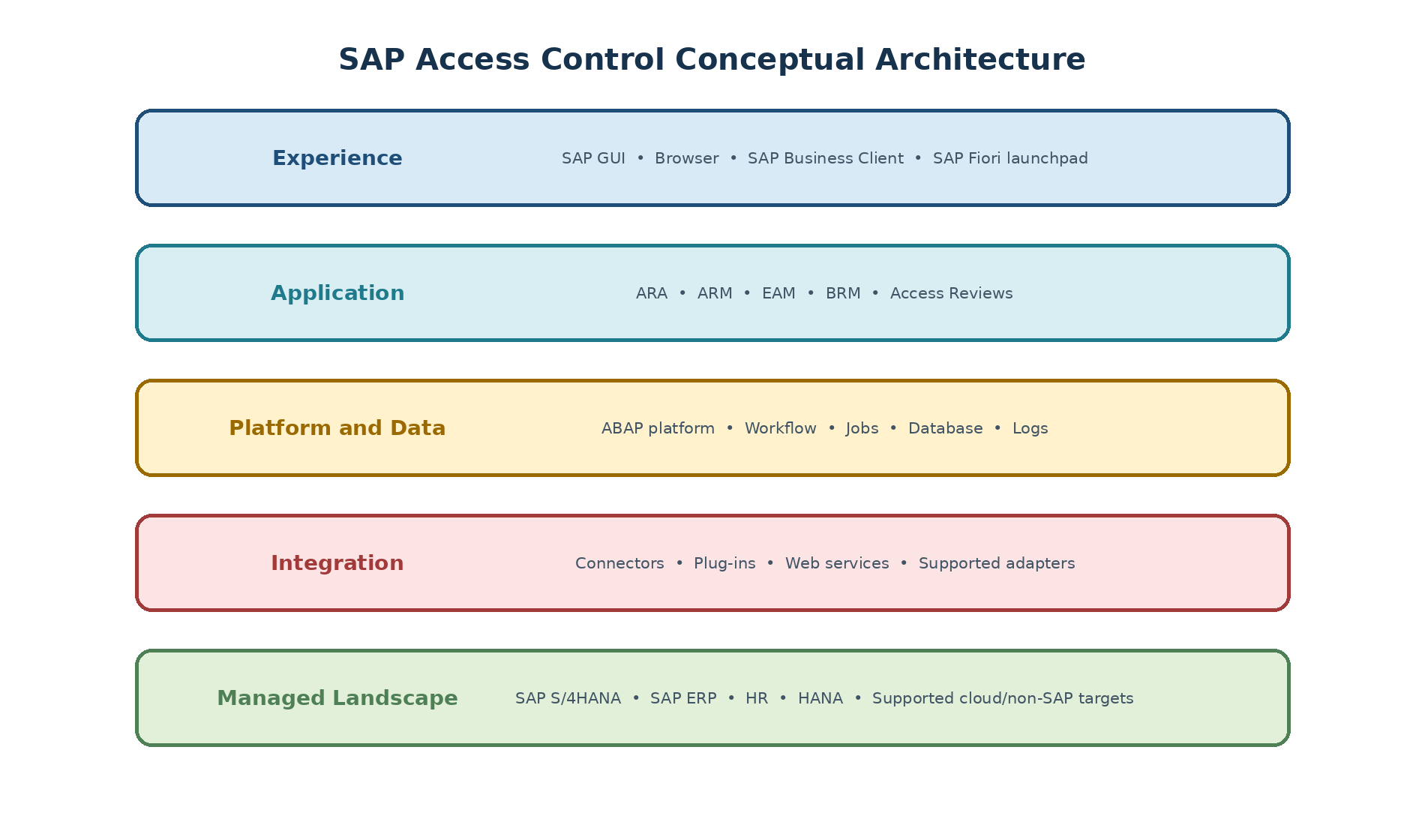
Figure 2. Original diagram: SAP Access Control conceptual architecture.
Landscape and Deployment Thinking
Development, Quality, and Production
A controlled enterprise landscape normally separates development, quality or testing, and production. Configuration and developments originate in development, integrated behavior is validated in quality, and approved changes move to production through transports and protected environment-specific maintenance. System IDs, clients, connectors, URLs, technical users, jobs, and data must not be assumed identical.
Minimal Landscapes and Their Limits
A minimal or combined landscape can be useful for demonstrations, training, or limited tests, but it weakens separation, testing realism, availability, performance isolation, and change control. Production design should consider volume, uptime, recovery, security zones, regional requirements, and the number of managed systems and active capabilities.
Availability, Security, and Change Control
Define backup, recovery objectives, monitoring, and tested restoration.
Separate configuration, administration, approval, monitoring, and audit access.
Protect technical destinations, certificates, secrets, and environment-specific values.
Control transports, post-import activities, job schedules, and rollback.
Mask or minimize production data in non-production systems.
Core SAP Access Control Capabilities
Access Risk Analysis
ARA analyzes users, roles, profiles, and proposed access against an approved ruleset for segregation-of-duties conflicts, critical actions, and critical permissions. Results can support remediation, mitigation, role design, requests, and reporting. Accuracy depends on current authorization data, correct rules, organizational scope, and business ownership.
Access Request Management
ARM structures user and access lifecycle requests through validation, risk analysis, workflow approval, provisioning, notifications, and audit history. It can support additions, removals, account actions, validity changes, and other configured processes. Automation should evaluate the resulting complete access, not only the requested delta.
Emergency Access Management
EAM provides controlled, time-bound privileged access for exceptional work. Firefighter users or roles are assigned with ownership, reason, validity, session or activity logging, and independent review. The model may be centralized or decentralized and ID- or role-based according to supported configuration and policy.
Business Role Management
BRM governs role definition and change through methodology, ownership, naming, attributes, analysis, approval, generation, testing, and lifecycle records. It supports governance around technical roles but does not substitute for correct PFCG authorization design.
Access Reviews
Periodic reviews allow managers, role owners, risk owners, firefighter owners, and other reviewers to certify or reject user access, SoD risks, role content, mitigation, or privileged assignments as supported. Effective certification requires accurate reviewers, understandable data, escalation, target-system removal, and closure evidence.
Access Governance Lifecycle
Discover and Clean
Establish scope, synchronize reliable data, validate the ruleset, analyze existing users and roles, prioritize high-impact conflicts, remediate excessive access, and approve only justified mitigation. A clean report is not the goal; controlled and necessary access is.
Design and Keep Clean
Use governed roles, risk-aware access requests, complete-access analysis, controlled provisioning, time-bound emergency access, and monitored exceptions so new changes do not recreate old risks. Role and request processes should include ownership and evidence by design.
Review and Stay in Control
Run periodic access, risk, role, mitigation, and firefighter reviews according to policy. Confirm rejected access is removed, recurring conflicts are analyzed, reviewer quality is measured, and rules, roles, workflows, owners, and training are improved.
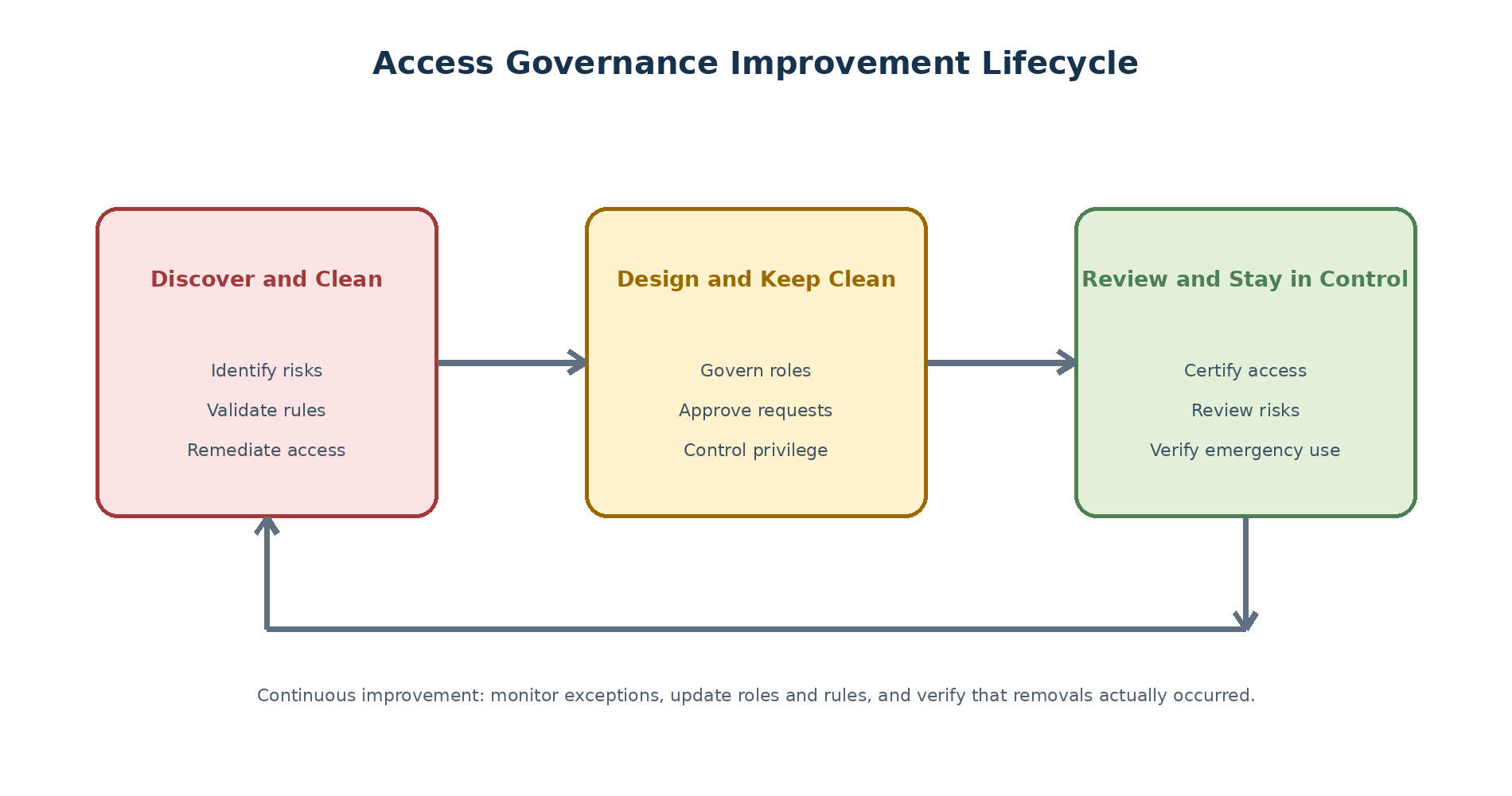
Figure 3. Original diagram: continuous access governance improvement lifecycle.
Supported-System Categories
SAP ABAP and SAP S/4HANA Systems
SAP Access Control can govern supported SAP ABAP-based systems through appropriate connectors and plug-ins. Repository analysis, authorization synchronization, provisioning, usage collection, HR functions, or emergency logging may require different components or permissions. “Connected” never means that every capability is supported.
HR, Database, Identity, and Non-SAP Systems
Supported scenarios can include SAP HR sources, SAP HANA database access, identity-management applications, directories, portals, and selected non-SAP or cloud targets through web services, OData, database connections, identity-governance services, or approved adapters. Each scenario has its own object model, mappings, limitations, and security requirements.
Capability and Plug-In Validation
| Validation item | Required evidence |
| Release compatibility | PAM, Maintenance Planner, and current plug-in or adapter documentation. |
| Analysis support | Representative users, roles, permissions, and expected risk result. |
| Provisioning support | Approved add and remove actions with target confirmation. |
| Usage or emergency logs | Complete activity sample with correct time and reviewer visibility. |
| Identity or HR data | Mapped fields, source priority, terminated-user behavior, and privacy control. |
| Operational support | Jobs, monitoring, retry, retention, recovery, and accountable owner. |
Cloud and Hybrid Integration
Cloud Governance Options
Cloud access governance can be implemented with supported SAP cloud identity-governance services and integrations. SAP Access Control documentation also describes using SAP Cloud Identity Access Governance as a bridge for certain requests from on-premise SAP Access Control to supported cloud targets. Exact services, names, entitlements, target coverage, and functional scope must be checked against current documentation and contracts.
Bridge-Based Hybrid Pattern
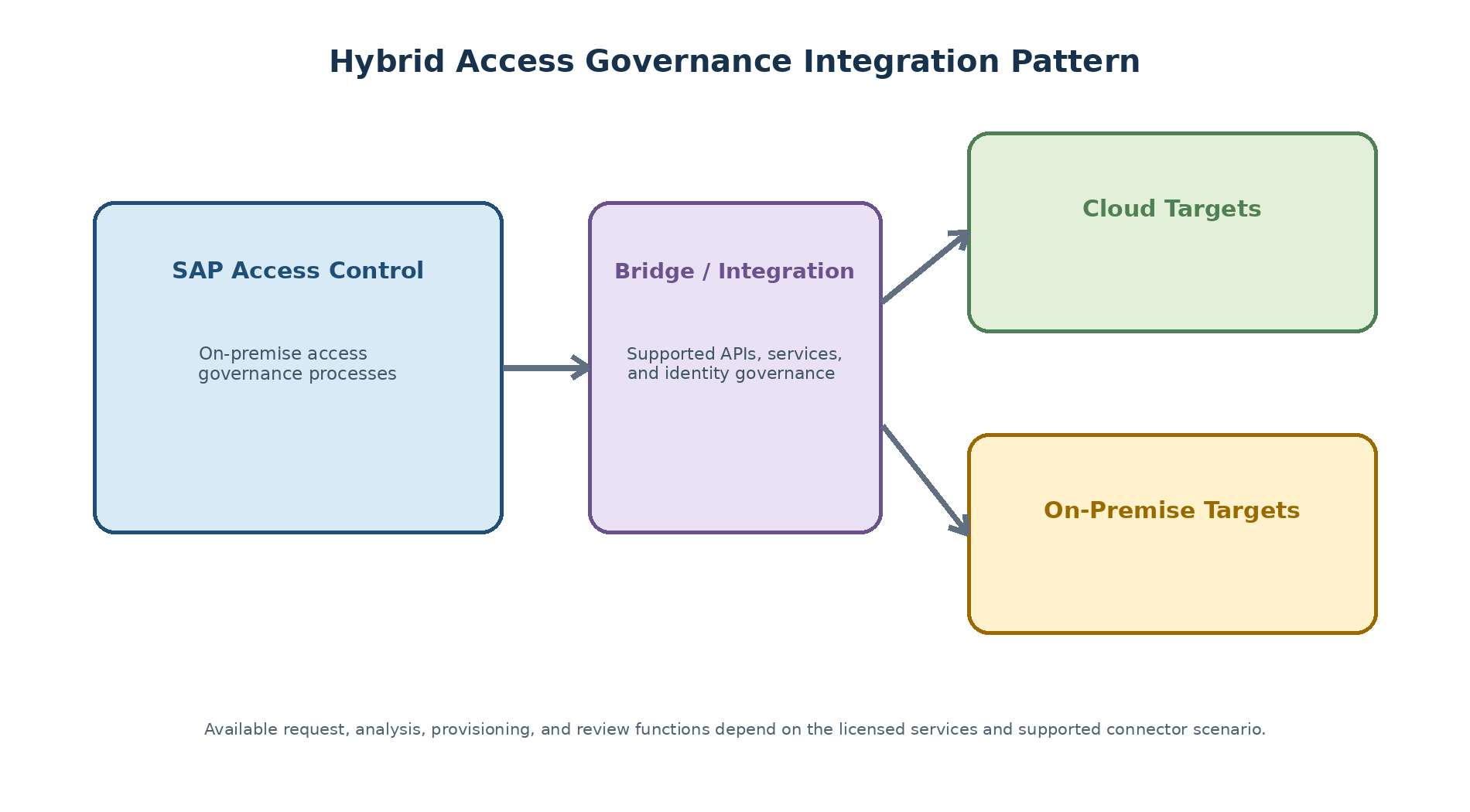
Figure 4. Original diagram: hybrid access governance integration pattern.
Limitations and Verification
Confirm whether analysis, request, provisioning, review, and usage are supported for each target.
Validate ruleset content for the target authorization model; do not assume SAP transaction rules apply.
Confirm identity authentication, BTP or tenant prerequisites, APIs, certificates, and network route.
Test error handling, partial provisioning, retries, duplicate requests, and target confirmation.
Review licensing, data residency, privacy, retention, availability, and operational ownership.
Practical Business Scenario
Purchase-to-Pay Conflict
A user can maintain supplier master data, enter supplier invoices, and execute payments across two connected systems. No single role appears excessive when viewed locally, but the combined access allows the user to create or change a supplier and complete a payment without independent intervention.
Governance Response
Confirm the business activities and the transactions, services, and permissions that implement them.
Analyze complete cross-system access using an approved rule.
Remove incompatible access or redesign responsibilities where practical.
If immediate removal is not possible, approve a time-bound mitigation with owner, monitor, evidence, and expiry.
Use controlled emergency access for exceptional privileged tasks instead of expanding permanent roles.
Include the user, roles, risk, and mitigation in periodic review.
Expected Evidence
Rule definition, owner, rationale, scope, and test cases.
User and role analysis before and after remediation.
Request, approval, risk result, provisioning, and target confirmation.
Mitigation assignment, monitoring evidence, validity, and review.
Emergency-session activity and controller decision where applicable.
Periodic certification and verified removal of rejected access.
Implementation Success Factors
People, Process, Data, and Technology
| Dimension | Success condition |
| People | Named risk, role, control, system, workflow, and operational owners with decision authority. |
| Process | Defined request, remediation, mitigation, privilege, review, escalation, and issue workflows. |
| Data | Current identities, organizations, roles, authorizations, ownership, usage, and logs. |
| Technology | Supported architecture, secure connectors, validated rules, jobs, workflow, performance, and monitoring. |
| Assurance | Traceable evidence, independent testing, metrics, issue remediation, and continuous improvement. |
Common Misunderstandings
Installing SAP Access Control makes the organization compliant.
A delivered ruleset is automatically correct for every customer.
A clean SoD result proves least privilege.
Mitigation permanently resolves a poorly designed role.
Provisioning success proves the final access is correct.
A connector supports every function merely because the connection test passes.
Periodic review is complete when reviewers click approve or reject.
Recommended Foundation
Define objectives, scope, ownership, and risk appetite before configuration.
Establish authoritative identity and role data plus reconciliation.
Build and test rules with business and authorization specialists.
Design separate DEV, QAS, and PRD controls with secure integration.
Measure data freshness, workflow age, provisioning exceptions, review completion, and removal.
Revalidate architecture, plug-ins, cloud scope, and controls after upgrades and business change.
Content Coverage Validation
Source Concept Coverage
| Reference concept family | Coverage in this chapter |
| Need for GRC and selection considerations | Business drivers, technology risk, evaluation questions, and operating model. |
| SAP GRC portfolio and Access Control position | Solution areas, scope, and limitations of technology. |
| Product evolution and terminology | Historical capability names and current mapping. |
| Architecture and landscape | Experience, application, platform, database, integration, managed systems, and DEV/QAS/PRD. |
| Capabilities and governance phases | ARA, ARM, EAM, BRM, reviews, clean/keep clean/stay in control lifecycle. |
| Supported systems and cloud integration | SAP, HR, HANA, identity, non-SAP, cloud, bridge pattern, and validation. |
| Compliance outcome | People, process, data, continuous monitoring, evidence, and practical scenario. |
Version-Dependent Items
The exact ABAP platform level, add-on and plug-in combinations, databases, SAP Fiori components, supported targets, cloud service names, bridge functions, delivered rules, and feature availability are deliberately not frozen as universal facts. These items must be verified for the implementation date and support package using official SAP sources.
Summary
Key Takeaways
GRC integrates accountability, risk decisions, obligations, controls, monitoring, and evidence.
SAP Access Control is the access-governance application within a broader SAP GRC portfolio.
The product has evolved, but historical terms remain common in project communication.
Architecture spans user experience, application, platform, database, integration, and managed systems.
ARA, ARM, EAM, BRM, and reviews support a continuous clean, keep clean, and stay-in-control lifecycle.
Supported-system and hybrid-cloud capabilities require target-specific verification.
Compliance depends on people, process, data, technology, and continuous assurance—not software alone.
SEO and Publishing Metadata
| Publishing field | Recommendation |
| SEO title | SAP GRC and Access Control Foundations: Architecture and Capabilities |
| URL slug | /sap-grc-access-control-foundations/ |
| Meta description | Learn SAP GRC and Access Control fundamentals, including business drivers, product evolution, architecture, landscape, capabilities, supported systems, and cloud integration. |
| Primary keyword | SAP GRC and Access Control fundamentals |
| Secondary keywords | SAP Access Control 12.0 overview; SAP GRC architecture; ARA ARM EAM BRM; SAP GRC cloud integration |
| Long-tail keywords | SAP GRC Access Control guide for beginners; SAP Access Control architecture and capabilities; get clean stay clean stay in control |
| Search intent | Foundational learning, product evaluation, and implementation orientation |
| Suggested schema markup | TechArticle, Article, BreadcrumbList |
| Internal-link suggestions | Implementation planning; licensing and sizing; post-installation setup; connector configuration; Access Risk Analysis |
| Image caption suggestions | Integrated GRC model; SAP Access Control architecture; governance lifecycle; hybrid integration |
| Image alt-text suggestions | Original diagrams explaining SAP GRC, SAP Access Control architecture, lifecycle, and hybrid cloud integration |
Authoritative Reference Suggestions
Screenshot Guidance
This conceptual chapter uses four original diagrams. Product screenshots are not required. If an editor later adds a SAP screen, it must be newly captured from an authorized non-production system and must hide system ID, client, hostname, user ID, company data, IP addresses, internal URLs, and role names.